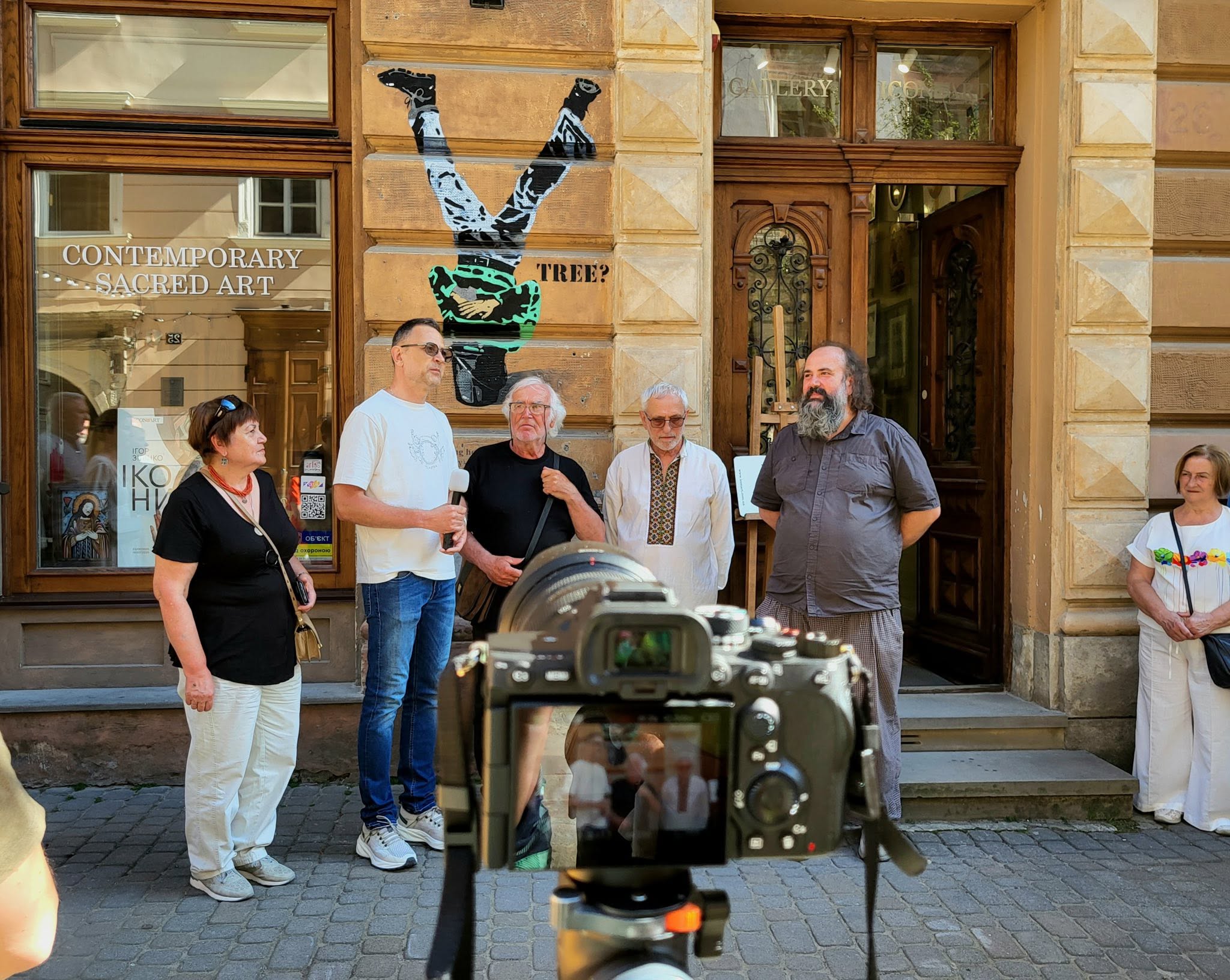
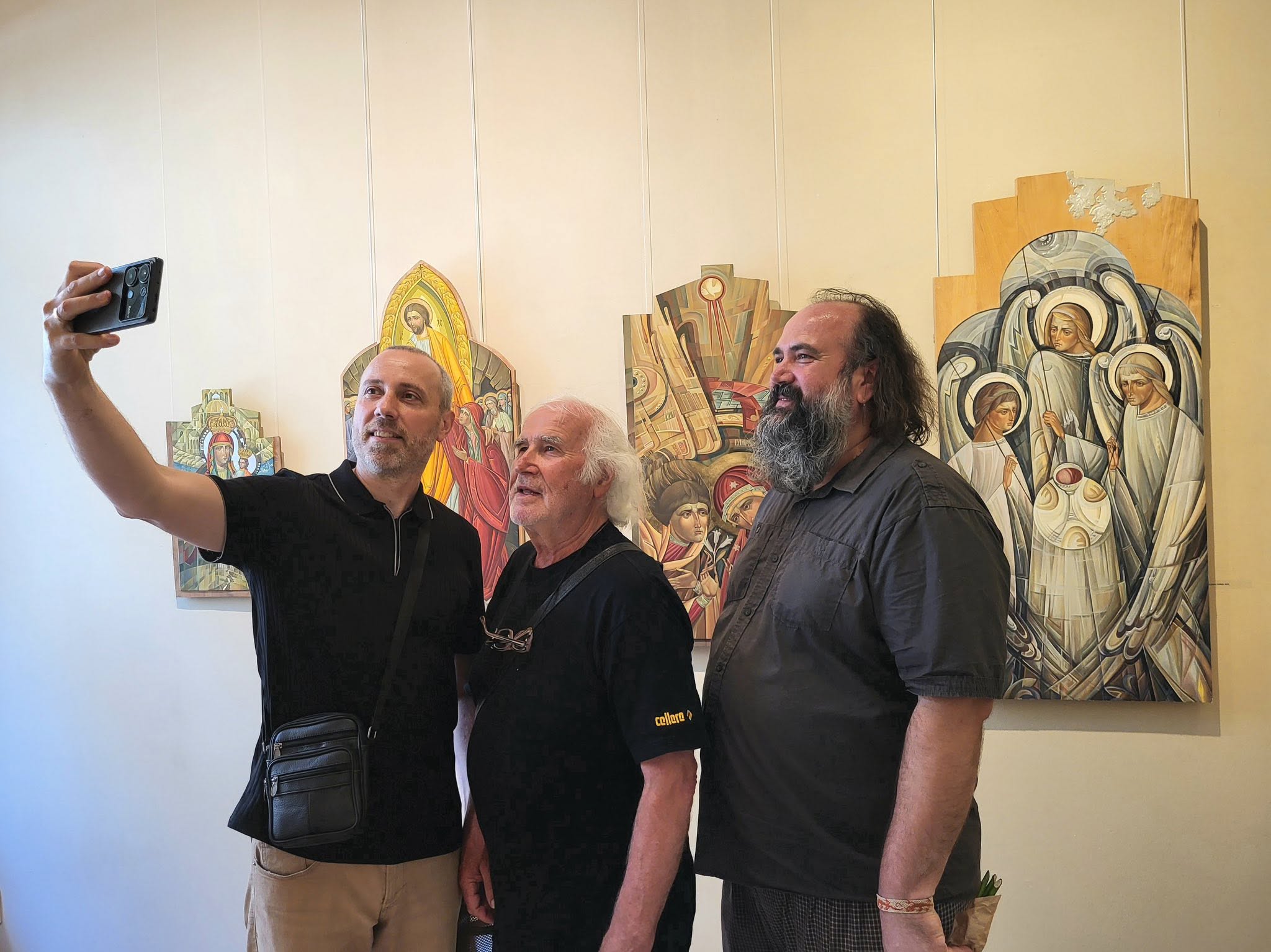
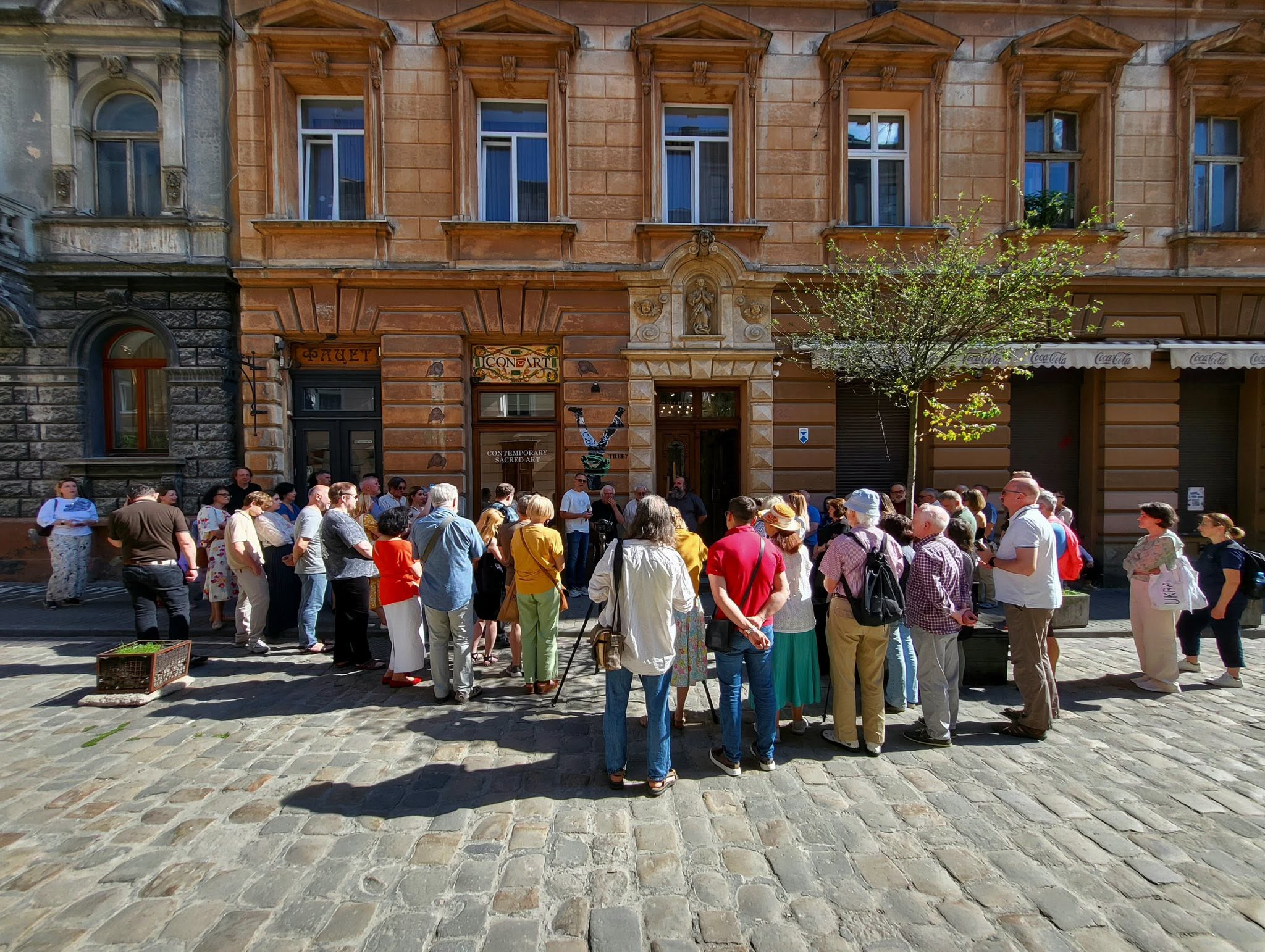
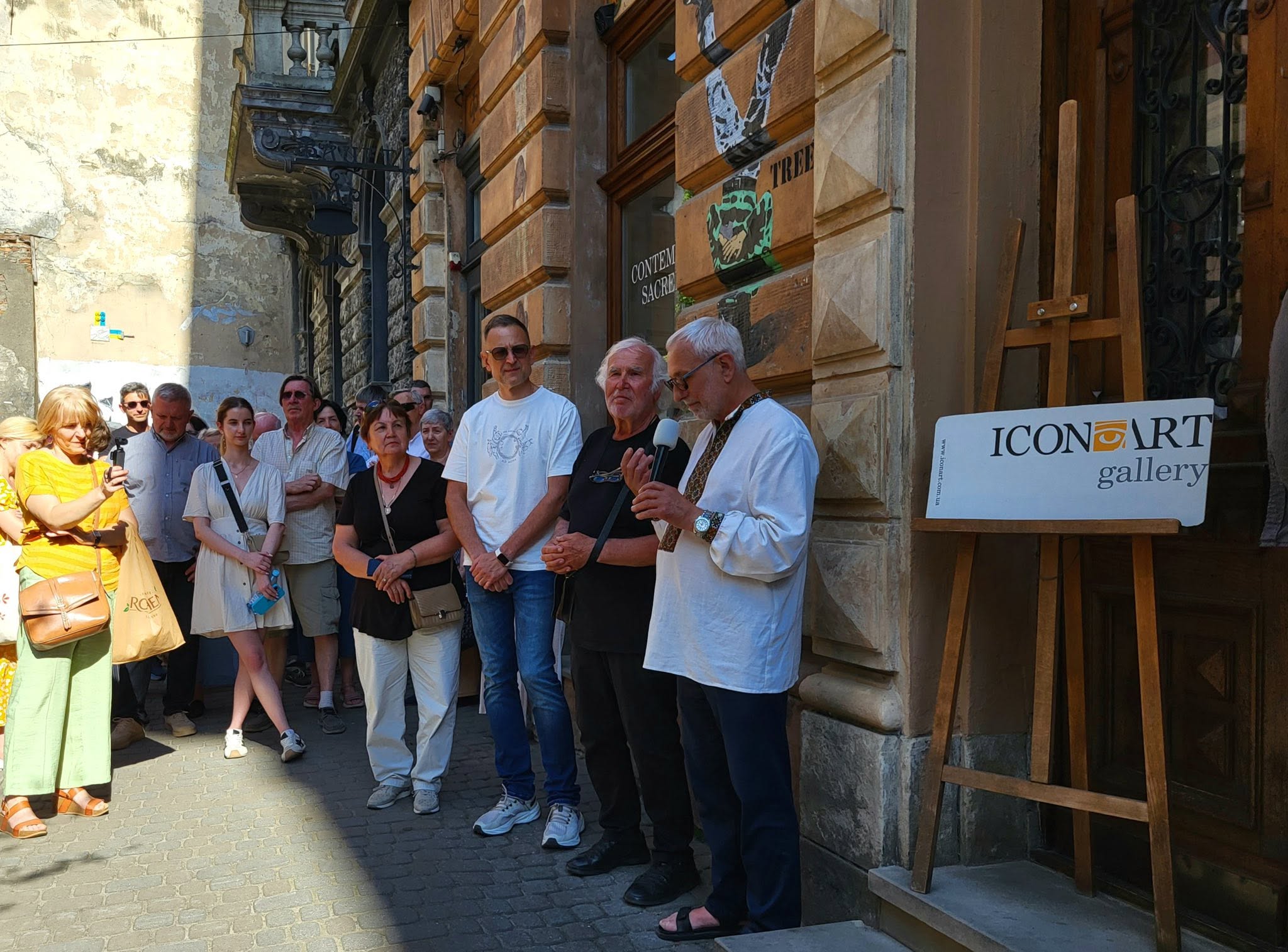
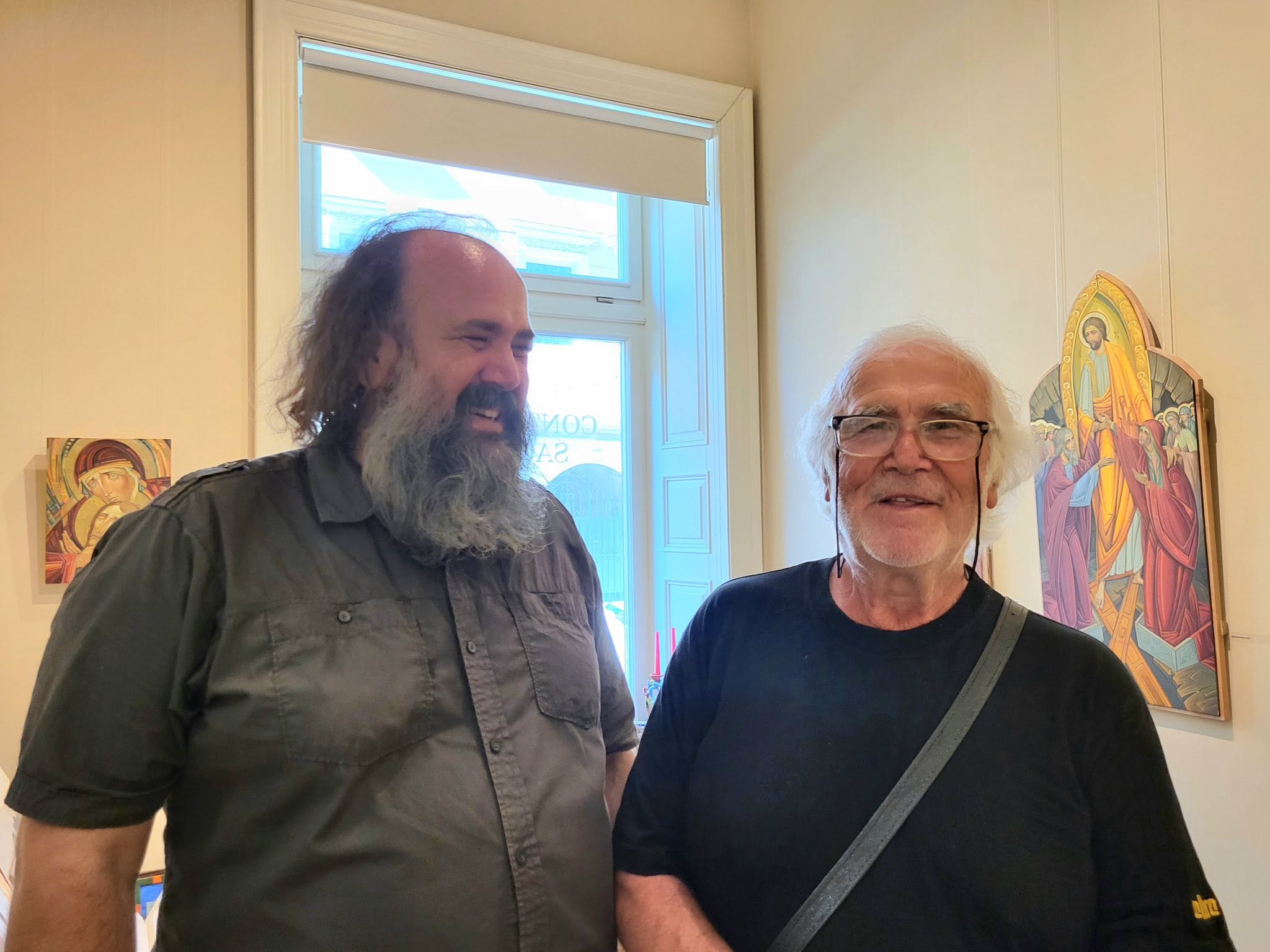
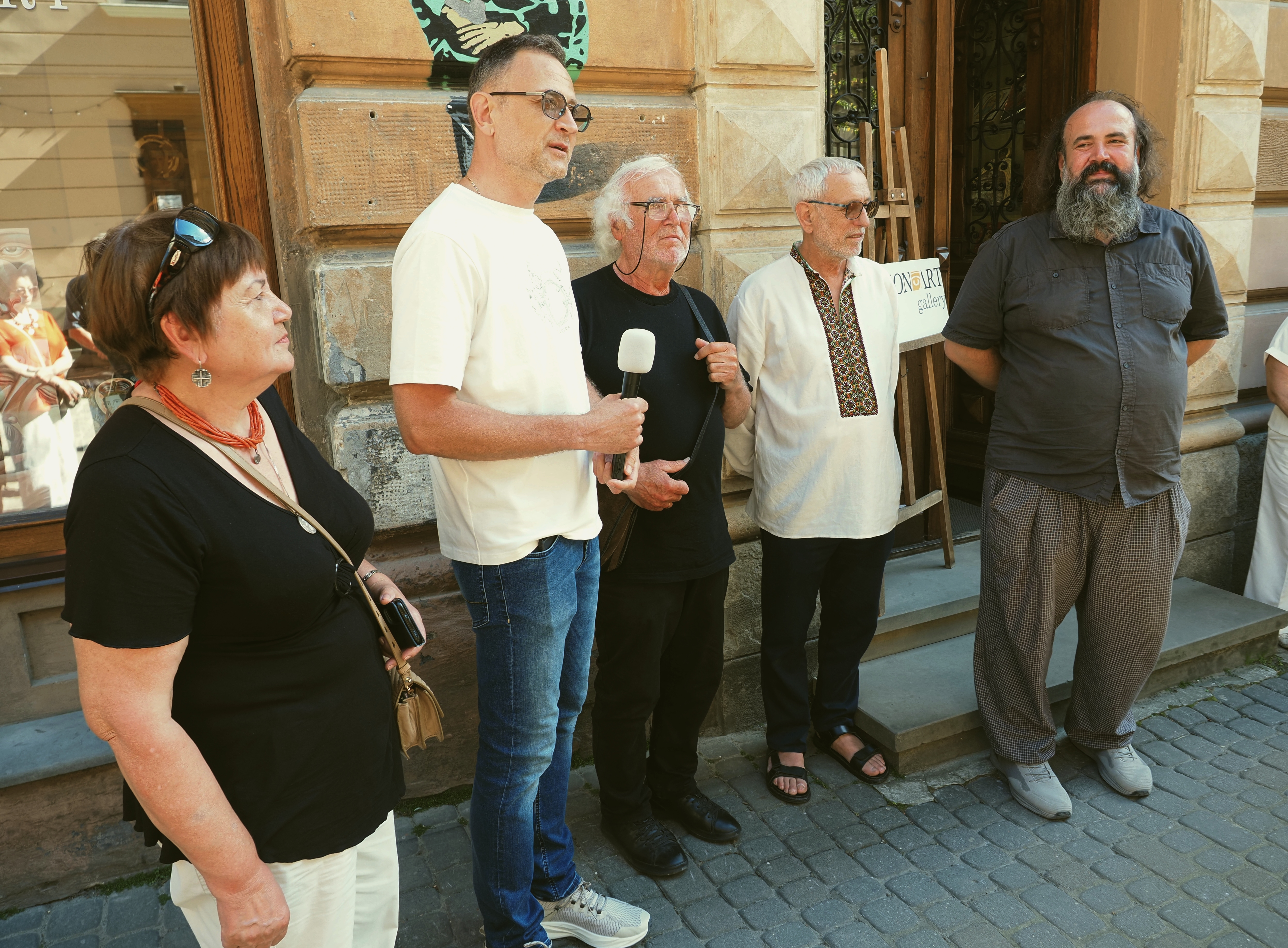
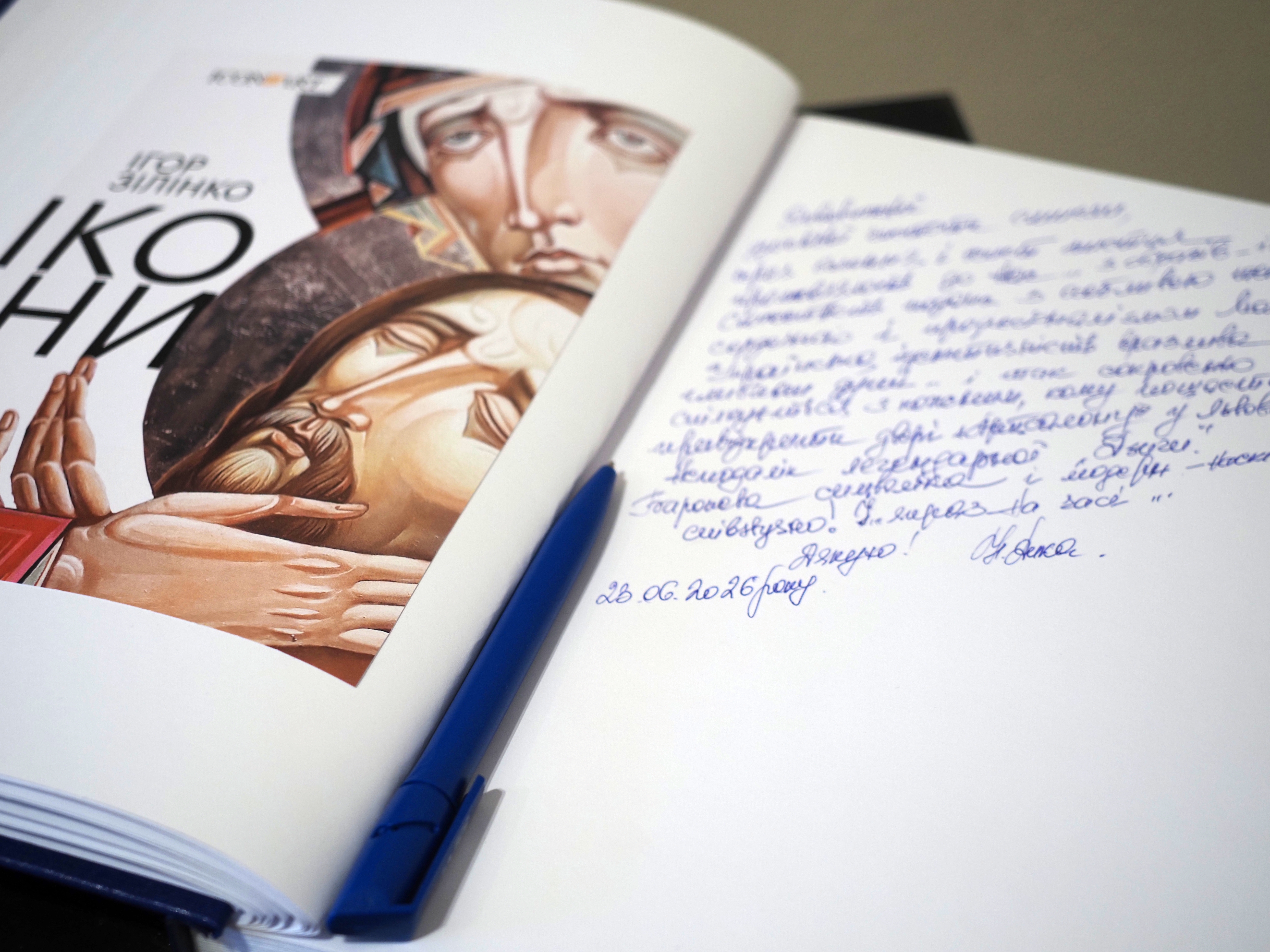
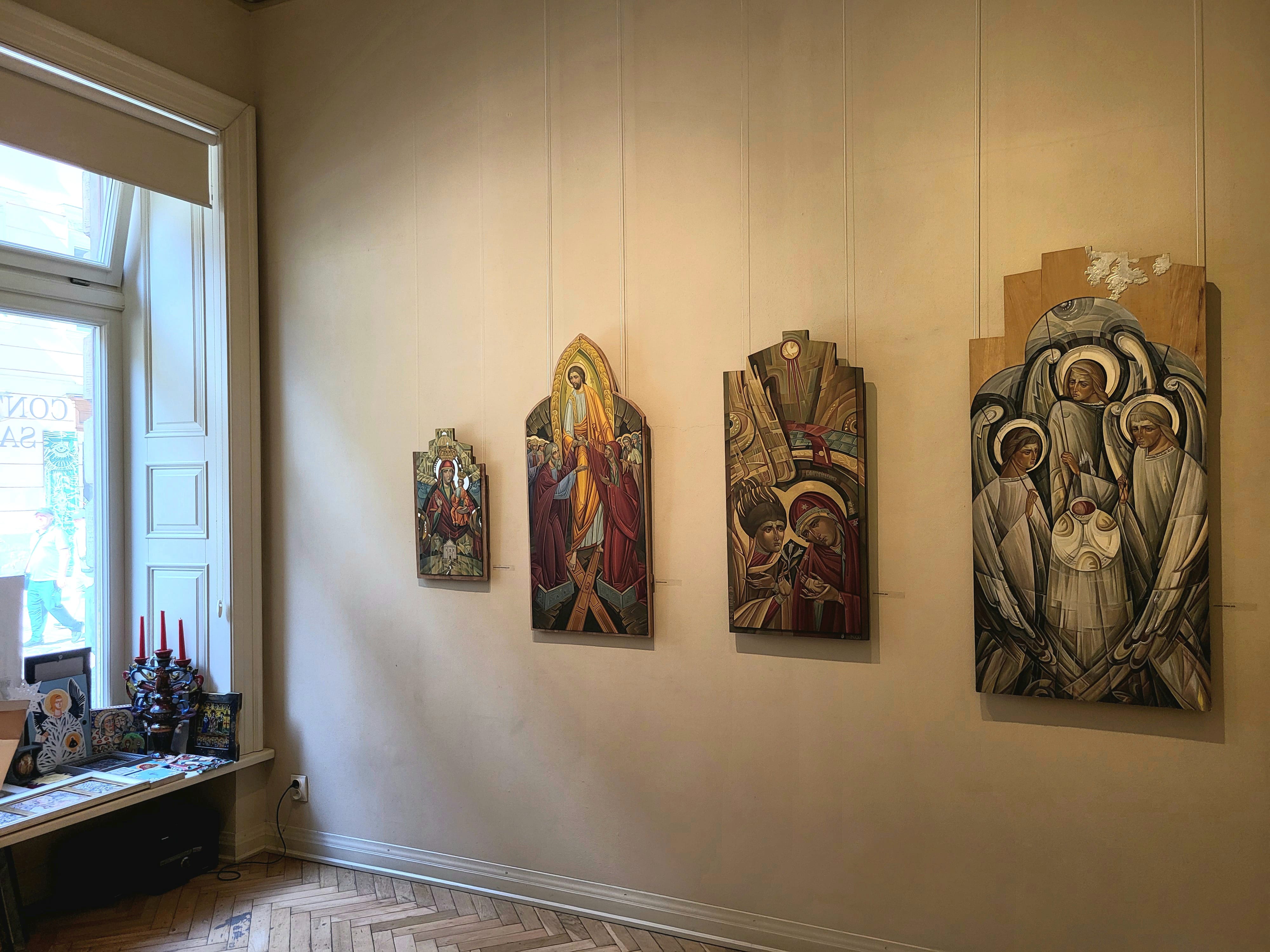
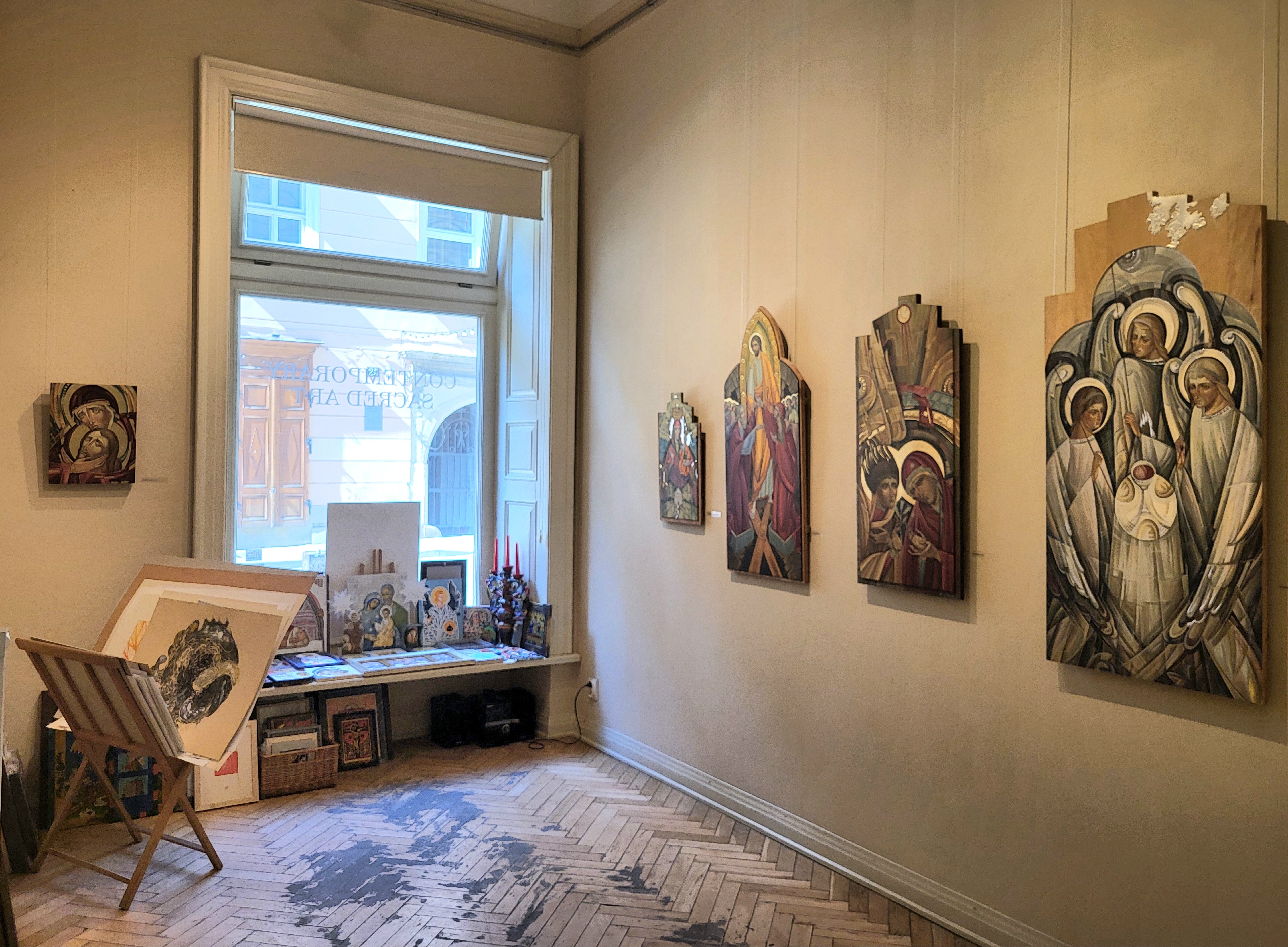
The exhibition is accompanied by an essay by Roman Zilinko, the artist’s son, who shares personal memories of Ihor Zilinko’s creative journey and his many years devoted to icon painting.
“Ihor Zilinko. Icons”
Finding One’s Icon
"Ihor Zilinko is a prominent Ukrainian artist of his generation, whose creative pursuits spanned the period from the second half of the 1970s through the 2000s. He is known primarily as a graphic artist, as well as one of the founders and members of the informal Ternopil artists’ group Khoruhva. He belonged to a circle of young creative intellectuals who shaped the national, unofficial face of Ternopil during the years of stagnation, uncertainty, and the final troubled decades of the Soviet era. Following the emergence of the Ukrainian Greek Catholic Church from the underground, he became deeply engaged with sacred art and icon painting, to which he remains devoted today."
This is probably how a text introducing an exhibition of Ihor Zilinko’s icons would begin. Yet I have the great privilege of writing this commentary not as an outsider guiding visitors through another exhibition, but as a son who has spent his entire conscious life watching his father at work and witnessing his artistic search. Therefore, this will not be a professional text, but a deeply personal one. Or rather, a collection of memories that, in my view, reveal something of my father’s art and his journey toward icon painting.
Ever since childhood, driven by an endless curiosity, I was involved in everything that happened at home: I listened attentively to conversations and watched my parents at work with great interest. That is why I especially enjoyed spending time among their friends, most of whom were artists or people connected with the arts. Yet the most exciting moments came when my mother or father took me to the art school where they both taught. Better still was visiting my father’s studio. There I had the opportunity to witness his fascinating experiments in graphic art.
The most vivid memories are of the times when my father worked on icons—or rather, on what we called “holy images.” This was in the 1980s. The process felt almost mystical, unfolding in semi-secrecy and known only to close family and friends. As a child, I was told not to speak about it outside the house. The memory that remains strongest is of an elderly woman who came to our home one winter day, wrapped in a warm shawl. She carried two carved wooden frames, blackened by fire, slung over her shoulder, and another bundle wrapped in cloth. Inside were two fire-damaged lithographs depicting Christ and the Virgin Mary in the Passion cycle. Rendered in monochrome, they left a lasting impression on me because traces of fresh soot still clung to them, along with the unmistakable smell of smoke.
The woman had come because someone had told her that “a painter lives here,” and she hoped he could restore the sacred images that had been damaged in a fire in her home. She lived in the village of Ozerna, more than twenty kilometres from Ternopil. My father painted copies for her and accepted no payment for the work. The scorched lithographs themselves remained hanging in his studio for many years afterward.
Another memory, from a slightly later time. It must have been around 1990 or 1991. My father and a friend were painting a church near Ternopil, and the parish priest commissioned a mural that was to be executed in the “Eastern style,” that is, in the Byzantine-Ukrainian tradition. I remember how they searched for the scarce books and reproductions of icons available at the time, especially Ukrainian ones. There was virtually no information to be found. A few semi-underground, poor-quality reproductions from the 1930s of works by Osinchuk, perhaps Sosenko (as I recall, images of Boychuk’s sacred works were completely unavailable at that time), and the first printed holy cards featuring icons painted in the diaspora by Khrystyna Dokhvat and Fr. Juvenalii Mokrytskyi. That was probably the moment when the icon truly captivated my father and became a challenge he felt compelled to pursue.
In the early 1990s, my father somewhat divided his artistic practice between the work he created in his studio and the commissions he carried out primarily for the Church. It is worth emphasizing that this division stemmed not so much from a conscious separation between art and livelihood, but rather from an awareness that he was only at the beginning of his journey in icon painting. Even then, sacred themes had already begun to dominate his graphic works, appearing in such series as Holy Images (Obrazky), The Church in Ruins, the painted diptych Golden Baroque, and others.
Later, with the beginning of the 2000s, the focus gradually shifted toward icon painting. In this, my father and I found much in common, as around the same time I, too, became fascinated by sacred art, though from a more theoretical perspective. As a result, we had endless topics to discuss and many opportunities to share our discoveries with one another.
For the past twenty-odd years, my father has worked exclusively in icon painting, and the works presented in this exhibition belong to that period of his artistic life.
This is how my father found his icon.
Roman Zilinko